Probability Assessments Guide Banker and Value Choices in Routine Betting Practices
Written by Zoe Schmitz · Aug 3, 2026

Probability Assessments Guide Banker and Value Choices in Routine Betting Practices
Probability assessments form the foundation for identifying banker selections, which carry higher likelihoods of success, and value selections, where odds exceed the true chance of an outcome. Those who study betting markets note that converting decimal odds into implied probabilities allows for direct comparisons against estimated event chances. Data from industry reports indicate that bettors who apply these methods consistently track outcomes across multiple markets rather than isolated events.
Calculating Implied Probabilities from Market Odds
Implied probability emerges when bettors divide 1 by the decimal odds, yielding a percentage that reflects the market's view of an outcome. Observers note that adjustments for bookmaker margins become necessary because raw calculations often exceed 100 percent across all selections in an event. Researchers at academic institutions have documented how removing the overround produces normalized probabilities that align more closely with historical frequencies. In August 2026, updated datasets from sports analytics firms showed that normalized figures improved alignment between estimated chances and recorded results in both racing and team sports.
Defining Banker Selections Through Probability Thresholds
Banker selections typically require estimated probabilities above 70 percent according to multiple industry analyses. Those who compile daily routines often combine several such selections into smaller accumulators because the joint probability remains manageable when individual thresholds stay elevated. Figures from regulatory bodies outside the UK reveal that selections meeting these criteria appear more frequently in lower-risk categories such as match favorites with strong recent form records. The process involves cross-referencing statistical models with current conditions including weather, track surfaces, or player availability.
Identifying Value Selections Where Discrepancies Exist
Value selections arise when an individual's estimated probability exceeds the implied probability derived from available odds. This gap creates positive expected value, a concept that quantitative studies have tracked across thousands of wagers. One analysis conducted by an Australian research center found that value opportunities clustered in specific market segments such as over-under totals and handicap lines during mid-week fixtures. Bettors who maintain records of their probability estimates versus closing odds can quantify how often these discrepancies produce measurable edges over extended periods.
Integrating Assessments into Daily Betting Workflows
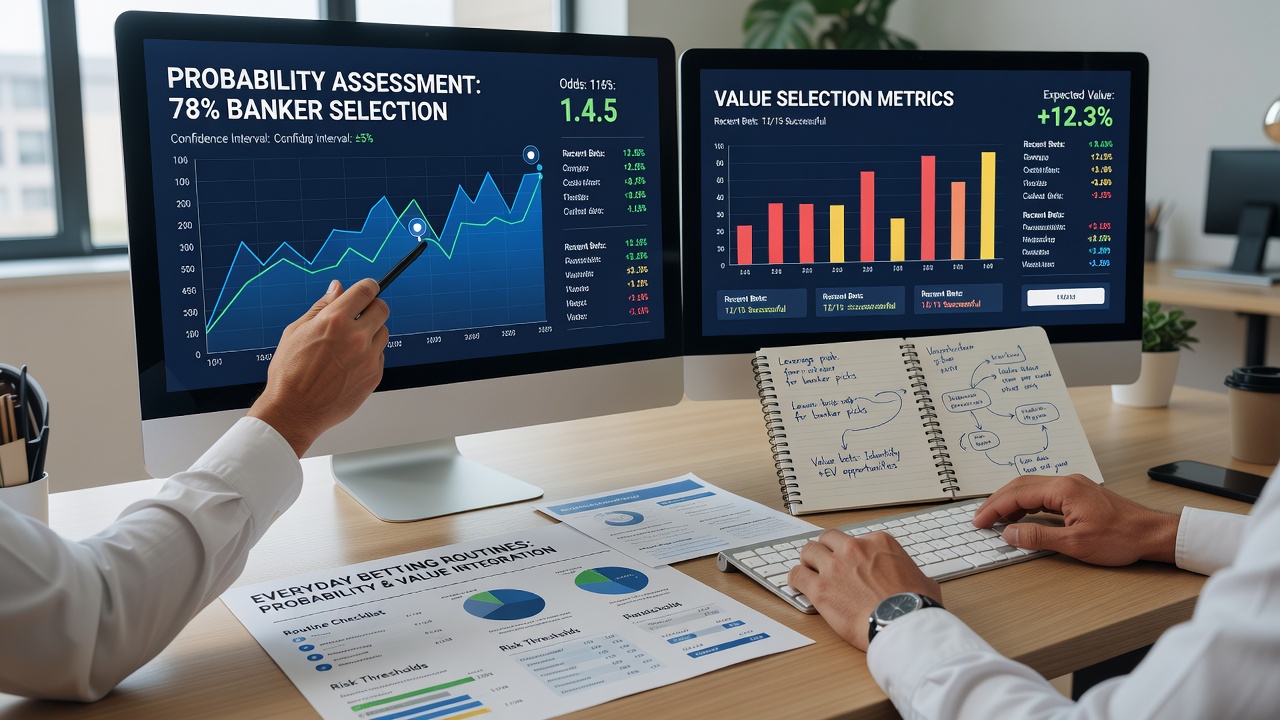
Daily workflows that incorporate probability assessments usually begin with data collection from multiple sources before any odds comparison occurs. People who follow structured routines allocate time to review historical datasets, apply weighting factors for recent performance, and then generate probability ranges rather than single-point estimates. A Canadian gaming association report highlighted that bettors using software tools to automate parts of this process recorded higher consistency in their value detection rates compared with manual methods alone. The same report noted seasonal patterns where certain leagues produced more frequent discrepancies during August windows when team lineups undergo significant changes.
Combining Bankers and Value Plays in Accumulator Structures
Accumulator structures benefit when one or two banker selections anchor the bet while additional value selections increase potential returns without proportionally inflating risk. Industry observers have recorded that limiting accumulators to three or four legs maintains joint probabilities above practical thresholds in most cases. Data compiled by European gambling research networks show that mixing banker and value elements across different sports reduces correlation risks that arise when all selections come from a single event type. Those maintaining long-term records report that tracking each component's contribution separately helps refine future probability estimates.
Tools and Data Sources Supporting Probability Work
Modern bettors access probability models through public statistical databases and proprietary software that incorporate machine learning outputs. A study published by a university-affiliated research group demonstrated that models trained on multi-year datasets achieved improved calibration when they included variables such as travel schedules and rest days. External links to authoritative sources provide supplementary datasets that users can incorporate into their own calculations, including Australian gambling research publications and reports from the National Council on Problem Gambling that examine behavioral patterns alongside market data. These resources supply raw numbers that support independent probability derivations without requiring direct bookmaker data feeds.
Monitoring Performance and Adjusting Estimates
Performance monitoring requires systematic logging of both estimated probabilities and actual outcomes over dozens of betting cycles. Analysts have observed that recalibration occurs naturally when recorded frequencies diverge from initial estimates by more than a few percentage points. In practice, this means reviewing selections monthly and updating weighting factors for variables that show persistent bias. Reports issued in 2026 indicated that participants who adjusted thresholds seasonally maintained steadier returns compared with those who used static models throughout the year.
Conclusion
Probability assessments supply a structured method for distinguishing banker selections from value opportunities within everyday betting activities. The combination of implied probability calculations, threshold definitions, and ongoing performance tracking creates a framework that multiple research sources have examined across different jurisdictions. Bettors who apply these techniques record their estimates, compare them against market odds, and refine their approaches based on accumulated results. Such methods remain available through public data sources and analytical tools that continue to evolve with additional seasonal information.